Drug abuse is a global challenge, silently harming individuals, breaking families, weakening communities and encouraging crime. From New York to London to New Delhi, misguided youth seek solace in drugs. Synthetic drugs like fentanyl (a synthetic opioid) and methamphetamine (a synthetic stimulant), and now nitazenes, have largely replaced traditional plant-based drugs like cocaine and heroin, because synthetic drugs can be made anywhere, at any time, requiring only chemicals, lab equipment and basic know-how. According to the US Centres for Disease Control, more than 48,000 Americans died in 2024 after taking drug mixtures containing fentanyl, which can be fatal in doses as small as 2 milligrams a day.
Worldwide, consumption of illicit drugs kills 600,000 people annually, and 100,000 more in drug wars. Drug trafficking flourishes because it generates windfall profits – drugs are sold at a hundred to one thousand times of their cost. Drug merchants are no more like yesteryear’s drug-lords but more like modern businessmen, with sophisticated supply and distribution chains, who communicate on the dark web, and accept payments in crypto currency. Drug traffickers sometimes deploy narco-submarines to cross oceans with their abominable cargo.
Advertisement
Despite the best efforts of US enforcement agencies, Mexican criminal gangs, known as the Sinaloa Cartel, and CJNG or the Jalisco Cartel, have penetrated deep into the US; supplying drugs even to isolated communities through clever use of social media and messaging applications. The Sinaloa and Jalisco cartels, labelled as “transnational criminal organizations” by US law enforcement agencies, are not just drug manufacturers and traffickers; to support drug trafficking, these cartels indulge in arms trafficking, money laundering, migrant smuggling, sex trafficking, bribery, extortion, and a host of other crimes – and have a global reach extending into Europe, Africa, Asia, and Oceania.
Drug trafficking is fuelling gang wars in European port cities like Antwerp. In Latin America, traffickers pay huge bribes to corrupt cops, prosecutors, judges and politicians; drug runners put up candidates in Mexico’s local elections; Peru’s parliament has passed laws to protect criminals and hinder investigations; armed forces had to be called to fight drug smugglers in Fiji. US President Trump has publicly accused the Mexican government of colluding with drug cartels. Trump has also threatened to attack Venezuela, whose President, Nicolás Maduro, is called a ‘narco-terrorist’ by Trump. (Incidentally, or otherwise, this year’s Nobel Peace Prize winner, María Corina Machado, is an opponent of Nicolás Maduro). Presently, the US is raining Hellfire missiles on small boats in the Caribbean – to deter Venezuelan drug traffickers.
Right after assuming office, President Trump imposed additional tariffs on Canada, Mexico and China for illegally producing and delivering fentanyl in the US. According to US agencies, Chinese corporations supply chemical components of dangerous drugs like fentanyl to criminal gangs in Canada and Mexico, knowing fully well that the chemicals were being procured to manufacture fentanyl. The Canadian and Mexican gangs then manufacture fentanyl, and smuggle it into the US. Sometimes, the Chinese provided instructions on how to make fentanyl from the chemicals they had sold. Concerningly, according to National Drug Threat Assessment 2024, published by the US Drug Enforcement Administration (DEA), India was also fast emerging as a major source country for chemicals used to manufacture fentanyl.
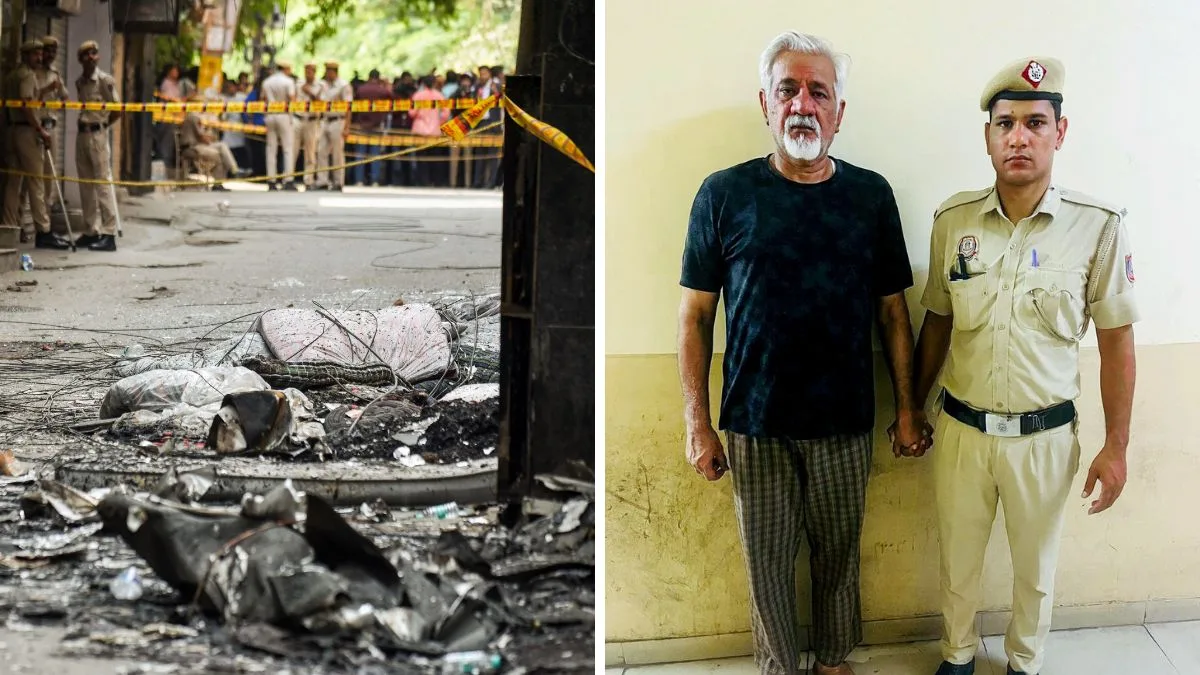
Busting of an illicit methamphetamine manufacturing facility in Greater Noida, belonging to the dreaded Jalisco Cartel, bears out the US DEA’s concerns. The methamphetamine manufacturing unit was indistinguishable from nearby chemical factories, and even workers did not know what they were manufacturing. Production of such dangerous drugs in India would mean easier access, lower prices, and add to the number of Indian drug addicts. The presence of international cartels, could pour more money and muscle into the drug trade, and encourage other criminal activity.
It could appear far-fetched to extrapolate USA’s drug problems to India, but lying between the Golden Triangle (Myanmar, Laos, and Thailand) and the Golden Crescent (Afghanistan, Iran, and Pakistan), two of the world’s largest heroin-producing regions, India, which was earlier a transit point for drug shipments to the US and Europe, is increasingly becoming a significant consumer and producer of illicit drugs. India’s robust chemical and pharmaceutical sector makes it an ideal choice for drug syndicates to outsource it for manufacturing synthetic drugs, and also use it as a source of precursor chemicals.
The increasing amount of drug seizures by Indian law enforcement agencies reflect this harsh reality; drugs worth Rs.25,330 crore were seized in 2024, an increase of over 55 per cent over 2023. The following statistics relating to drug seizures, in 2024, indicate the enormity of the problem:
A gigantic consignment of 3,132 kg of drugs valued at over Rs.2,000 crore was seized in international waters, off the coast of Gujarat.
Security agencies seized over 700 kg of contraband methamphetamine in Gujarat from an international drug trafficking cartel.
NCB confiscated 83 kg of high-grade cocaine in New Delhi.
A drug consignment worth approximately Rs.900 crore was seized from a courier centre in Delhi.
Agencies under MHA destroyed 1,17,284 kg of narcotics.
Globally, the war against drugs has entered a decisive phase. Most countries in Europe and North America, have legalised less harmful drugs like cannabis, which is also legal in 24 US States. Two approaches have been tried: the Portugal approach, which saw decriminalisation of personal use and possession of all drugs since 2001, shifting the approach from criminal prosecution to a public health issue, by giving addicts access to specialised medical services and de-addiction programmes. This approach succeeded in reducing drug-related deaths by more than 70 per cent. Also, new HIV infections among drug users fell significantly. This approach was followed by Canada and Switzerland, with similar results. The second approach is that of Japan, which is based on strict enforcement and community involvement.
Drug addiction in India is increasing at a fast pace. The 2016 movie, Udta Punjab, that showed the depth and ill-effects of drug addiction in Punjab, was initially not cleared by the Censor Board, but today many States like Kerala face a similar problem.
Traditionally, use of drugs like charas and ganja was legal in India. In the 1960s and 1970s, young people from the West came to India to achieve enlightenment through drugs. However, to fulfil its international obligations under the Single Convention on Narcotic Drugs, Convention on Psychotropic Substances, and United Nations Convention Against Illicit Traffic in Narcotic Drugs and Psychotropic Substances, Parliament passed the Narcotic Drugs and Psychotropic Substances (NDPS) Act in 1985 that prohibited the production/manufacturing/cultivation, possession, sale, purchase, transport, storage, and/or consumption of any narcotic drug or psychotropic substance – with hefty prison terms for violators.
While Western countries that motivated India to pass the draconian NDPS, have slowly relaxed drug control, we persist with total prohibition, even alcohol being taboo in many States. This approach has spawned a huge market for illicit drugs and contraband alcohol; new gangs have come up for drug manufacture and supply, and allied criminal activity. Before India becomes a significant player in the international drug trade, the time may have come to revisit our drug policies.
Till now, official response to the increasing drug menace has been one of looking the other way, or bluster. Thrice, in 2014, 2023 and 2024, PM Modi has talked about drug addiction in his Mann ki Baat programme; Home Minister Amit Shah reiterated his Government’s resolve to root out drug addiction, at a conference in September 2025. Going a step further, on 1 March 2025, Punjab Chief Minister Mann had vowed to make Punjab drug-free in the next three months. This was after his predecessor, Amarinder Singh, at the time of taking office, in 2017, had promised to eradicate the State’s drug problem, in four weeks. Sadly, none of these statements were accompanied by action on the ground; vested interests ensured that the drive against illegal drugs petered out, as soon as it began.
The only way to reduce the death, violence and corruption caused by the illegal drug trade may be to legalise and regulate the production and consumption of milder drugs. This would eliminate the price premium that draws the world’s most violent criminals to drugs trafficking. Drug users could then be sure of dosage and quality, making them shun much more dangerous illegal concoctions. Simultaneously, de-addiction programmes and public-health campaigns could lower drug deaths and harm, and cut demand.
The drug trade flourishes because drug users become helpless slaves to their addiction; as Salvador Dali had said: “I don’t do drugs. I am drugs.”
(The writer is a retired Principal Chief Commissioner of Income-Tax.)